
Lake Health
What makes a healthy lake?
Looking at the biological indicators in and around the lake is one of the best ways to gauge its long-term health.
Positive Signs:
Indicators of a Healthy Lake
-
Frogs, toads, and salamanders are incredibly sensitive to water quality because their skin absorbs waterborne contaminants and their eggs lack protective shells. The presence of a diverse array of amphibians is an excellent sign of clean, unpolluted water.
-
Aquatic insects require clean water and stable substrates to develop. While a summer mayfly swarm might be annoying, it is a great indicator that the water quality is high enough to support them and the broader food web.
-
A healthy lake features a variety of submerged, emergent, and floating native plants. They stabilize sediment, maintain oxygen levels, and provide critical shelter for fish..
Bad Signs:
Red Flags to Watch Out For
-
Cyanobacteria (blue-green algae) thrive in warm, nutrient-rich waters. Harmful Algal Blooms often look like green, yellow, or brown streaks, foam, or thick paint-like scum on the water's surface. They can produce potent toxins that cause breathing difficulties, rashes, and severe illness in humans and pets.
If you see a suspected HAB, stay out of the water and report it to EGLE.
Please check out EGLE’s Harmful Algal Blooms page for further details. You can also report suspected events either via this link or by calling the EGLE Environmental Assistance Center at 800-662-9278.
-
The introduction and spread of non-native species can severely disrupt a lake’s natural ecosystem and overall health.
AIS such as hydrilla and Eurasian watermilfoil are easily transported in the props and ballasts of unwitting boaters. These plants can spread rapidly and will crowd out native species, boat launches, and your favorite fishing and swimming spots.
Tips for Waterfront Homeowners

The biggest threat to the overall health of Michigan lakes is the loss of natural vegetation and excessive shoreline development.
Property owners play a massive role in lake conservation through these best practices.
Convert your Lawn at the Water's Edge
Turf grass has shallow roots that fail to stop erosion and cannot filter nutrient-rich stormwater runoff. A large lawn is also an attractive habitat for Canada geese, leading to fecal contamination in the water.
Create a 35-Foot Buffer Zone
Plant native trees, shrubs, and deep-rooted wildflowers or grasses in the first 35 feet of land adjacent to the lake. This naturally filters stormwater runoff before it enters the lake and disrupts the access areas that attract geese.
Avoid Concrete Seawalls
Hard seawalls reflect wave energy downward, scouring the lakebed, increasing erosion on neighboring properties, and blocking the movement of wildlife. Instead, use bioengineered erosion controls like coconut coir logs, rock riprap, and native plantings.
Become a Shoreland Steward
Take the survey through the Michigan Shoreland Stewards Program to evaluate how well your property is protecting the lake and earn a certificate of recognition.

Tips for
Boaters & Anglers
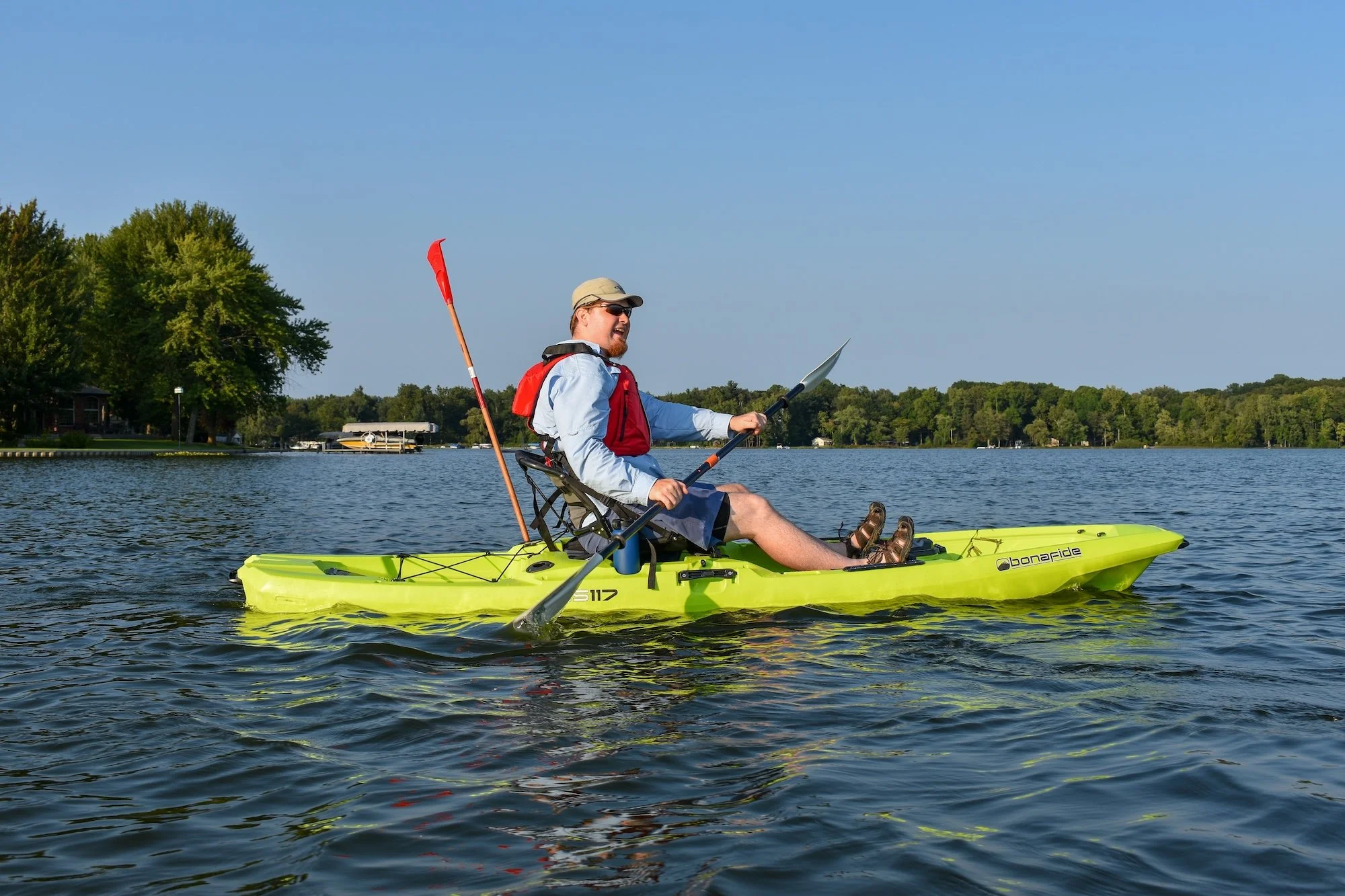
Recreational boating is the primary way Aquatic Invasive Species (AIS) and fish diseases are spread between isolated inland lakes.
Michigan law requires all boaters to take specific steps before transporting watercraft over land:
-
Inspect and remove all mud, aquatic plants, and debris from your watercraft, trailer, and gear.
-
Remove all drain plugs and drain water from bilges, ballast tanks, and live wells before leaving the access site.
It is highly recommended to disinfect bilges with a bleach solution (1/2 cup bleach to 5 gallons of water).
-
Ensure all boats and equipment are thoroughly dry before launching in a new waterbody.
-
Never release unused bait into the water. Dispose of it in the trash to prevent the spread of diseases and non-native species.
Caught fish must only be released back into the waterbody where they were caught.